The Supreme Court Struck Down Trump's Tariff Authority. He Found Another One.
The IEEPA ruling was a rare check on executive trade power. The administration's pivot to Section 122 raises a new question: does the president have any trade authority that courts will sustain?
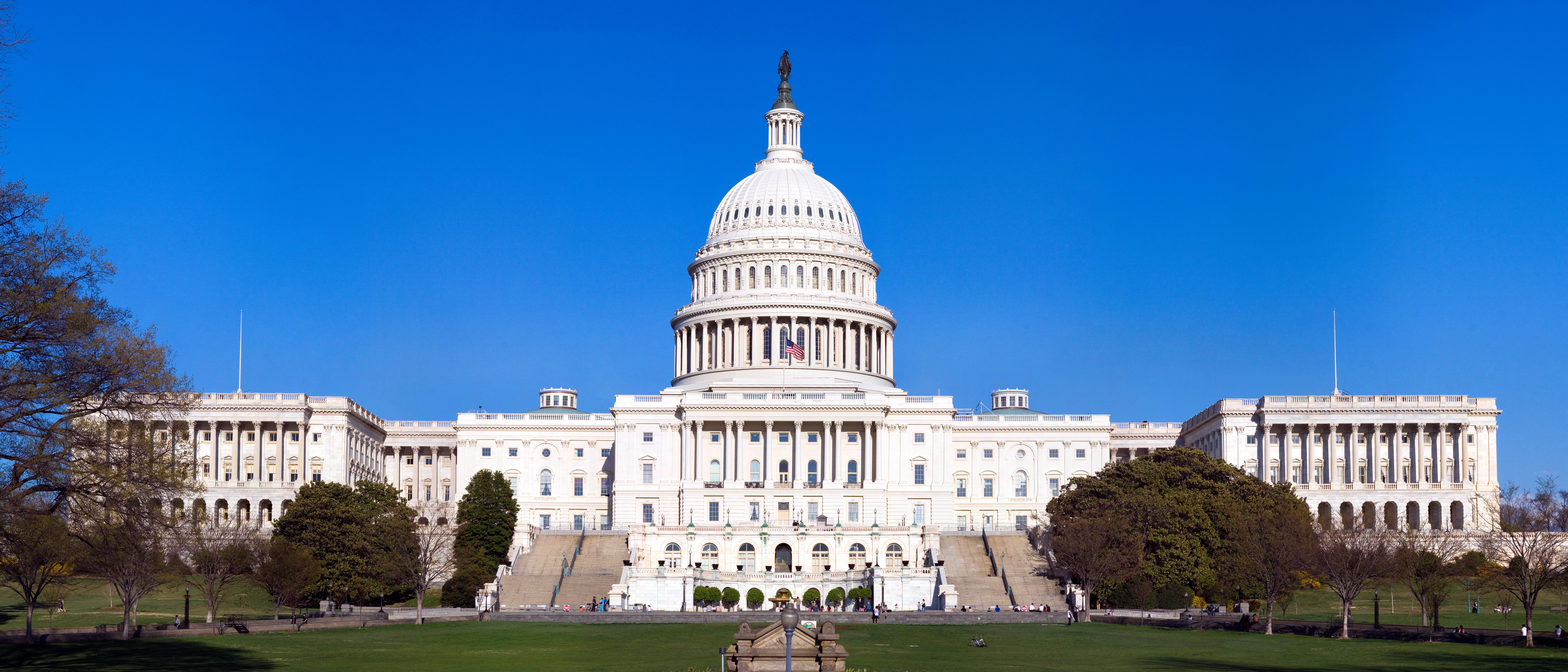
The Supreme Court's decision to strike down the president's use of the International Emergency Economic Powers Act to impose tariffs was, on its face, a significant check on executive power. IEEPA was designed to give the president authority over financial transactions during national emergencies: sanctions, asset freezes, the blocking of transactions with designated entities. Using it to impose tariffs on imported goods was, the Court concluded, a stretch that the statute's text could not support.
The decision was correct on the law. Whether it matters as policy is a different question.
Within days, the administration imposed a new 10 percent global tariff under Section 122 of the Trade Act of 1974, which authorizes the president to impose temporary duties of up to 15 percent for 150 days when there is a large and serious balance-of-payments deficit. Twenty-four states have already filed suit to challenge the new authority. The legal question of whether the current trade deficit constitutes the kind of balance-of-payments crisis Congress had in mind when it enacted Section 122 will likely reach the Supreme Court before the year is out.
The Larger Pattern
The IEEPA episode illustrates a structural problem in American trade policy that predates the current administration: Congress has delegated vast trade authority to the executive branch through a patchwork of statutes enacted over decades, and successive presidents have used those statutes in ways that their drafters did not anticipate.
Section 301 was designed for targeted retaliation against unfair trade practices. It has been used to impose broad-based tariffs on hundreds of billions of dollars in Chinese goods. Section 232, intended for genuine national security threats to specific industries, was used to impose tariffs on steel and aluminum imports from allied nations. IEEPA, an emergency financial powers statute, was repurposed as a general tariff authority.
In each case, the executive branch took a statute with a narrow purpose and stretched it to serve a broad policy agenda. The courts have now said, in the IEEPA case at least, that there are limits. But the underlying incentive remains: presidents prefer to act unilaterally on trade because Congress is incapable of producing trade legislation on any reasonable timeline.
The Policy Substance
The merits of the tariffs themselves are separate from the legal question of presidential authority, and they deserve more rigorous analysis than they typically receive from either their advocates or their critics.
The Tax Foundation estimates that the cumulative tariff increases since 2025 represent the largest tax increase as a percentage of GDP since 1993, equivalent to roughly $1,500 per household annually. Core goods prices have risen approximately 2 percent as a direct result. These are real costs, and they fall disproportionately on lower-income consumers who spend a larger share of their income on imported goods.
At the same time, the tariffs have generated $194.8 billion in revenue above the 2022-2024 average, revenue that would otherwise need to come from other taxes or additional borrowing. And there is a legitimate strategic case for reducing American dependence on Chinese supply chains, particularly in critical sectors like semiconductors, pharmaceuticals, and rare earth minerals.
The honest assessment is that tariffs are a blunt instrument being used to address a real problem. They impose broadly distributed costs to achieve narrowly targeted benefits. Whether this tradeoff is worthwhile depends on how effectively the tariff revenue and the supply chain adjustments are managed, a question of execution, not principle.
What Congress Should Do
The Supreme Court's IEEPA ruling creates an opportunity that Congress should not waste. The decision exposed the absurdity of a system in which the president's trade authority depends on which decades-old statute can be most creatively interpreted to support the desired action.
Congress should reclaim its constitutional authority over trade, not by blocking the president from imposing tariffs, but by creating a modern statutory framework that authorizes tariff actions under defined circumstances with appropriate oversight and sunset provisions.
This would mean replacing the current patchwork of Cold War-era statutes with a single, coherent trade authorities act. It would mean requiring congressional approval for tariffs that exceed a certain threshold or duration. It would mean establishing an expedited legislative procedure for trade actions, similar to the existing Trade Promotion Authority framework for trade agreements.
None of this is likely to happen quickly. Trade policy is politically toxic, and both parties have reasons to prefer a system in which the president acts and Congress complains without accepting responsibility. But the alternative, an endless cycle of executive action, litigation, and statutory arbitrage, serves no one's interests and produces policy that is neither stable nor predictable.
The business community, allied governments, and American workers all need to know what the rules are. Right now, no one does.
Related Stories

Cotton and Lee Prepare Birthright Citizenship Statute as Court Decision Looms
Senators Tom Cotton and Mike Lee are circulating draft legislation on birthright citizenship in anticipation of a Supreme Court ruling against the executive order expected by late June.
May 18, 2026 · 6 min read

Senate Discharges War Powers Resolution 52-48
The Senate voted 52 to 48 Friday evening to discharge the War Powers Resolution on the Iran blockade. Five Republicans joined every Democrat to override the leadership.
May 16, 2026 · 5 min read

Senate Will Vote Friday on War Powers Resolution
The Senate will vote Friday evening on a discharge motion for the War Powers Resolution. Four Republicans have committed to yes, putting Vice President Vance in position to break a tie.
May 15, 2026 · 5 min read